

Roles:
- Professor of Medicine, Epidemiology and Public Health, Yale Schools of Medicine & Public Health
- Director, HIV in Prisons Program, Yale University
- Director, Community Health Care Van, Yale University
- Academic Icon Professor of Medicine, University of Malaya-Centre of Excellence for Research in AIDS (CERiA)
Contact:
Biography:
Frederick (Rick) L. Altice, MD, MA, is a physician-scientist and Professor of Medicine (Infectious Diseases) and of Epidemiology and Public Health at Yale University, where he serves as Director of the Yale Center for Clinical and Community Research. He is an internationally recognized leader in implementation science, health service integration, global health, and health equity, with a career focused on translating evidence-based interventions into real-world practice for populations disproportionately affected by infectious diseases and substance use disorders. In parallel with his research leadership, he remains an active clinician in both infectious diseases and addiction medicine, ensuring that his work is continuously informed by the realities of patient care and health system delivery.
Dr. Altice's work is centered on implementation science at the intersection of HIV, hepatitis C, tuberculosis, and opioid use disorder, particularly among populations facing structural vulnerabilities. His research has focused extensively on people who inject drugs, but also includes men who have sex with men, transgender women, female sex workers, individuals involved in the criminal legal system, and populations affected by displacement and conflict. Across these groups, his work addresses disparities in access to prevention and treatment, including HIV prevention (PrEP), antiretroviral therapy, treatment for hepatitis C and tuberculosis, and medications for opioid use disorder.
A defining feature of Dr. Altice's work is his leadership in integrating health services that are traditionally delivered in silos. He has developed and evaluated models that bring together infectious diseases treatment, addiction care, mental health services, primary care and social support into coordinated, patient-centered systems. These models extend across clinical and community settings, including primary care clinics, hospitals, syringe services programs, correctional facilities, and transitional programs that support individuals returning to the community after incarceration. His work is grounded in the principle that effective care must address the full spectrum of medical, behavioral, and social needs faced by patients.
Dr. Altice has led a sustained and highly influential research program spanning epidemiology, intervention development, decision science and implementation science. His work has evolved from identifying multilevel determinants of poor treatment engagement and outcomes to designing, testing, and scaling evidence-based interventions in real-world settings. He has led large, multi-site implementation trials across diverse contexts, evaluating strategies to improve uptake, retention, and effectiveness of care. His research applies leading implementation science frameworks, including EPIS, PRISM, RE-AIM, iPARiHS, and CFIR, to guide the systematic introduction, adaptation, and scale-up of interventions while maintaining a focus on sustainability and health system integration.
A central and increasingly prominent focus of Dr. Altice's work is the role of stigma as a critical barrier to care. He has advanced the use of behavioral design and decision science principles to understand and reduce stigma at multiple levels, including patients, providers, and health systems. By applying concepts from behavioral economics and human-centered design, his work seeks to reshape how care is offered, framed, and experienced, making engagement in care easier, more acceptable, and more aligned with patient preferences. These approaches have been implemented across diverse populations and settings, including HIV prevention among MSM and transgender women, care for people who use drugs, and service delivery in criminal justice and global health contexts.
Dr. Altice has also led the development and evaluation of digital health and mobile health (mHealth) interventions designed to support implementation at scale. His work includes mobile applications, electronic health record-integrated clinical decision support tools, and AI-enabled platforms, including chatbots and adaptive interventions, that extend care beyond traditional clinical encounters. These tools are designed to support real-time decision-making for both patients and providers, improve engagement and retention in care, and facilitate the delivery of evidence-based interventions in diverse settings. A key component of this work is embedding shared decision-making into digital platforms, enabling care that is more responsive to patient preferences while remaining scalable across health systems.
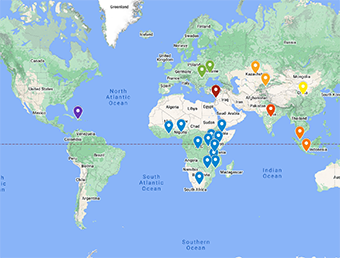
Over more than two decades, Dr. Altice has led implementation science and health systems research globally, with major programs in Southeast Asia, Latin America, Eastern Europe, Central Asia and the U.S. His work has focused on strengthening health systems, advancing equitable access to integrated care, and building sustainable research and training infrastructure. He has led or collaborated on projects funded by the National Institutes of Health, CDC, SAMHSA, and HRSA, and has partnered with international organizations including the World Health Organization, UNAIDS, USAID, PEPFAR, and UNODC to inform policy and large-scale implementation.
He directs multiple international implementation science research and training programs, including long-standing collaborations with partners in Malaysia, Peru, Georgia and Ukraine, and plays a central role in training the next generation of implementation scientists. Through these efforts, he has contributed to building global capacity in implementation science, health service integration, and stigma-informed care through Fogarty-funded international training programs.
Across his work, Dr. Altice has consistently focused on bridging the gap between evidence and practice through integrated, patient-centered models of care. His leadership is defined by a commitment to advancing implementation science, reducing stigma, improving health system performance, and developing scalable solutions that improve outcomes and reduce disparities for vulnerable populations in the United States and globally.
Dr. Altice is a physician-scientist whose work focuses on how to deliver the right care to the right patients by redesigning health systems, reducing stigma, and integrating services at scale.
CIRA Affiliated Projects:
Areas of Expertise:
- Addiction Medicine
- Addiction Treatment
- Buprenorphine
- Criminal Justice
- HCV and HBV Treatment
- Health Outcomes Research
- Health Services Research
- HIV Prevention
- HIV Treatment
- Infectious Diseases
- Injection Drug Use
- International Health
- Intervention Development
- Mental Illness
- Methadone
- Patient and Physician Counseling
- Prisons/Prison population
- Treatment Adherence
- Tuberculosis
- Vulnerable Populations